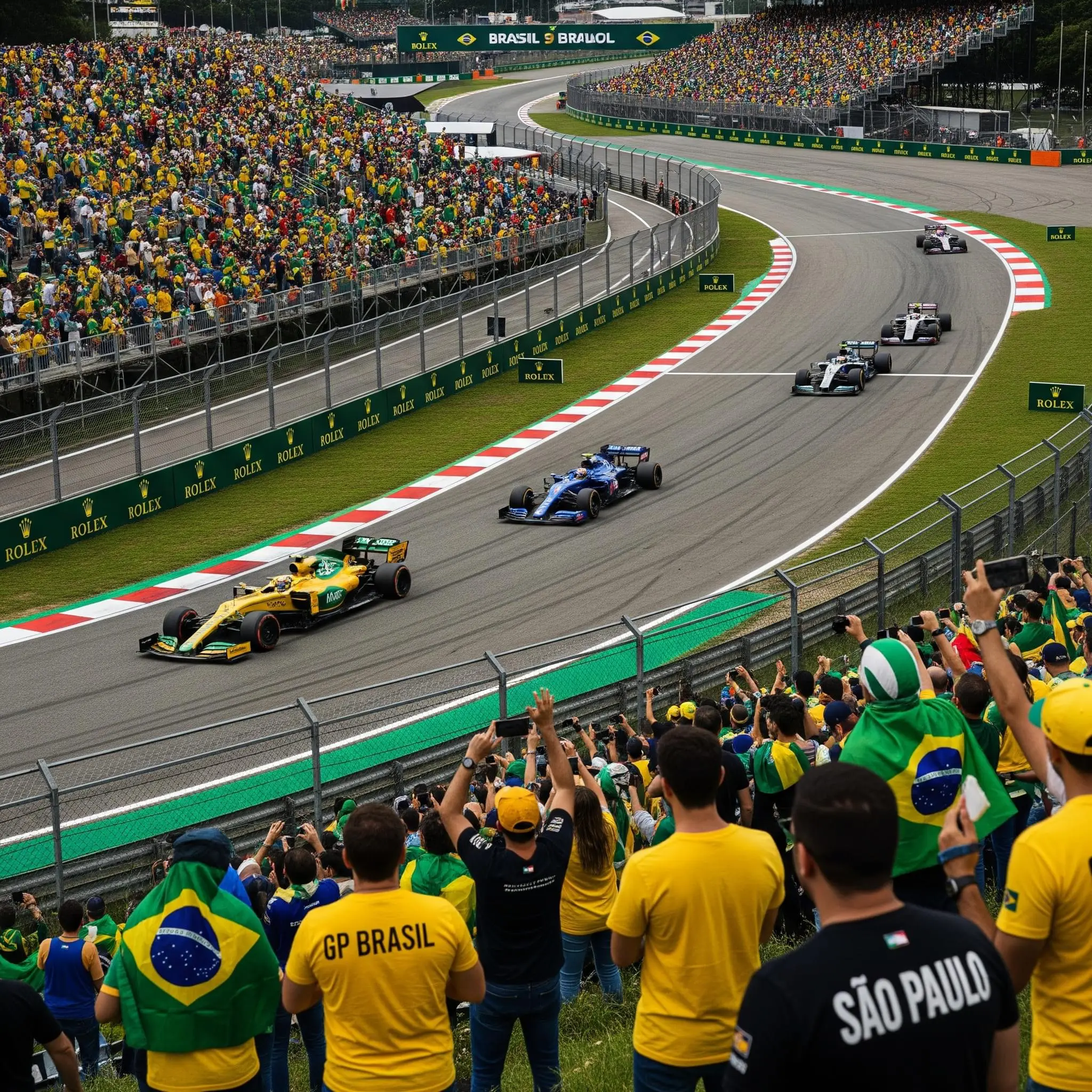
Feel the passion of the most vibrant race on the calendar. The Brazilian Grand Prix at Interlagos is a pure motorsport experience, where history and excitement meet at every turn. Secure your spot for an unforgettable weekend.
The Autódromo José Carlos Pace, popularly known as Interlagos, is one of the temples of world motorsport, located in São Paulo, Brazil. Its challenging 4.309-kilometer circuit is characterized by its counter-clockwise direction, a rarity on the international calendar, and its significant elevation changes that test drivers' skills. Inaugurated in 1940, the venue, with a capacity for 60,000 passionate fans, is famous for São Paulo's unpredictable weather and the incredible energy of its crowd. It has hosted top-tier events, including the Formula 1 Brazilian Grand Prix, where championships have been decided in dramatic finales. The combination of its history, its demanding layout with corners like the 'Senna S', and its vibrant atmosphere make it a unique experience and a prestigious international venue.
The Brazilian Grand Prix is much more than a race; it is a celebration of motorsport culture rooted in the heart of São Paulo. Held at the iconic Autódromo José Carlos Pace, better known as Interlagos, this event has earned a special place on the Formula 1 calendar for its unpredictable nature and vibrant atmosphere. The circuit itself is a masterpiece of race engineering.
Its anti-clockwise layout, one of the few on the calendar, along with its significant elevation changes and the city's altitude, presents a unique technical challenge for both engineers and drivers. Legendary corners like the Senna 'S', the Curva do Sol, and the Junção climb are not just tests of skill but also canvases where the sport's history has been written. The weather is another key factor at Interlagos.
Tropical downpours can appear suddenly, transforming a predictable race into strategic chaos and delivering unforgettable spectacles. This element of uncertainty, combined with the passion of the local fans who support their heroes with unmatched fervor, guarantees a weekend of high tension and guaranteed excitement. Throughout its history, the Brazilian Grand Prix has crowned multiple world champions, often in heart-stopping season finales, making it a top-tier sporting event and an unmissable experience.
Organizers of the 2026 Brazilian Grand Prix are already working on adaptations to the Interlagos circuit for the new era of Formula 1, which will feature simplified power units and 100% sustainable fuels.
The Autódromo José Carlos Pace has been confirmed as the host of the Brazilian Grand Prix on the provisional calendar for the 2026 season, ensuring the continuity of one of the fans' most beloved races.
A series of upgrades to the grandstands and fan zones at the Interlagos circuit are planned for the 2026 event, aiming to enhance the spectator experience and offer better services.
With the aerodynamic changes for 2026, Formula 1 teams are pointing to the challenging Interlagos circuit as a crucial benchmark for evaluating the performance of their new cars.
Initial interest for the 2026 Brazilian Grand Prix is exceptionally high, with tickets expected to sell out quickly once they go on sale, reflecting the growing popularity of the sport.
As is tradition at Interlagos, the unpredictability of São Paulo's weather remains a major topic of conversation ahead of 2026, promising to add an element of drama to the competition.
The city of São Paulo is developing logistics and tourism plans to accommodate the influx of visitors for the 2026 Grand Prix, reinforcing transport and hotel infrastructure.
The figure of Ayrton Senna will remain central to the promotion and atmosphere of the 2026 Brazilian Grand Prix, connecting new generations of fans with the country's rich motorsport history.
Frequently asked questions about purchasing tickets
